What Is Date Seed Coffee? Taste, Origins and Caffeine
Date seed coffee is made from roasted, ground date pits: dark, nutty and naturally caffeine-free. How it tastes, where it comes from and how to enjoy it.

Most of the world eats the date and throws the seed away. Across the Arabian Peninsula, that small, hard stone has long had a second life: roasted until it smells of cocoa and toasted nuts, ground to a fine powder, and simmered into a dark, comforting cup.
That cup is date seed coffee, known in Arabic as qahwat nawa al-tamr (قهوة نوا التمر). It contains no coffee beans at all, and therefore no caffeine. Yet it looks, smells and ritually behaves like coffee. If you have ever wished the evening cup didn't come with a price at 2 a.m., this guide is for you.
#What exactly is date seed coffee?
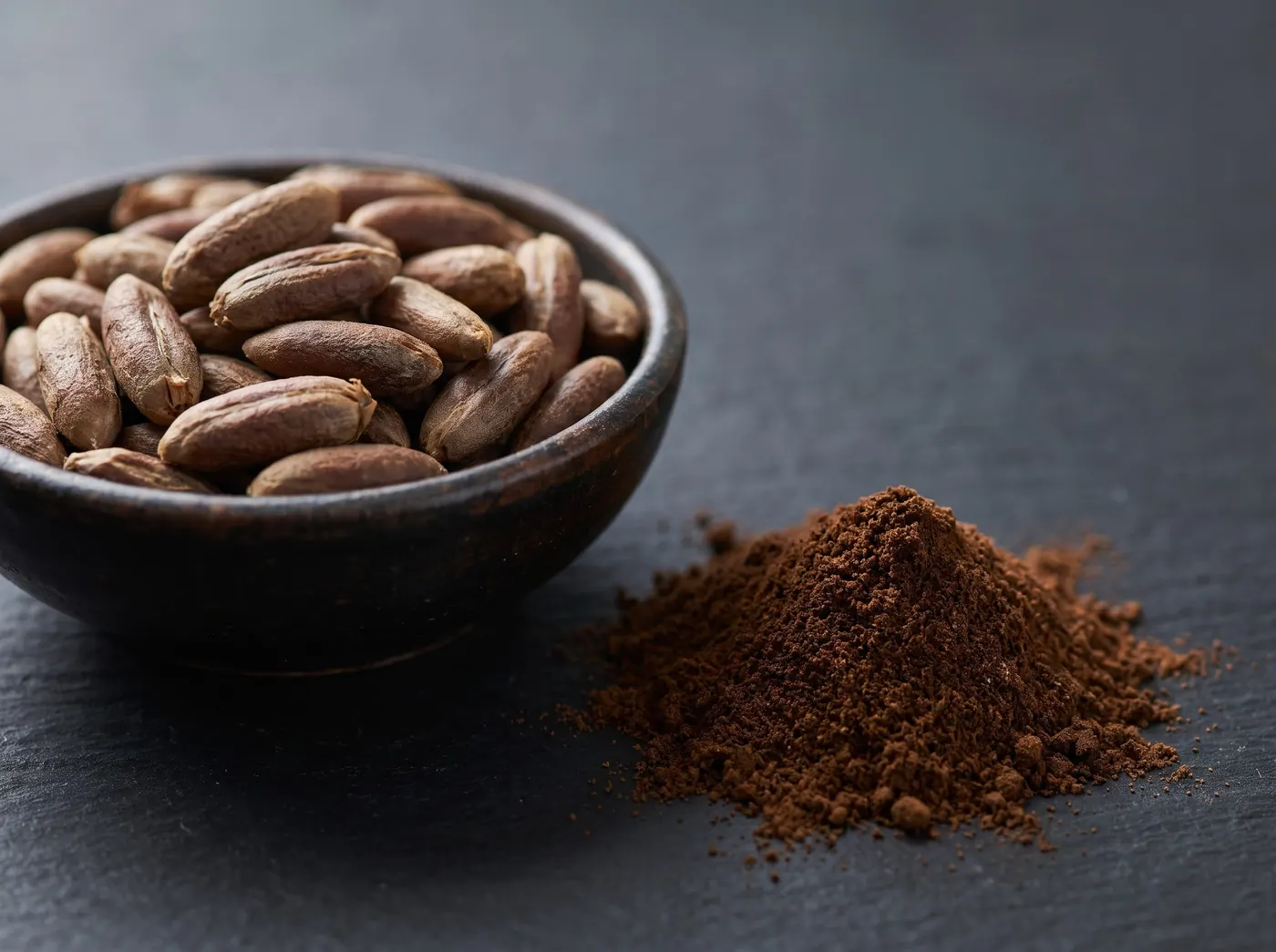
Date seed coffee is a hot drink made from the seeds (also called pits or stones) of the date palm, Phoenix dactylifera. The seeds are cleaned, dried, slowly roasted and milled. You brew the powder the way you would brew Arabic coffee or a French press, and you drink it black, with milk, or sweetened with honey or date syrup.
It is not a flavoured drink and it is not a blend. In its purest form, there is a single ingredient: roasted date seed. That is how Azkhaa makes it, and it is the simplest test for any product that carries the name. If the pack lists sugar, chicory, cereal or "natural flavours", you are drinking something else.
#A short history of the drink
The date palm is one of the oldest cultivated trees on earth, and almost every part of it has been used: fruit for the table, fronds for shade and roofing, trunks for beams. The seed, hard and bitter raw, was a by-product that clever households refused to waste.
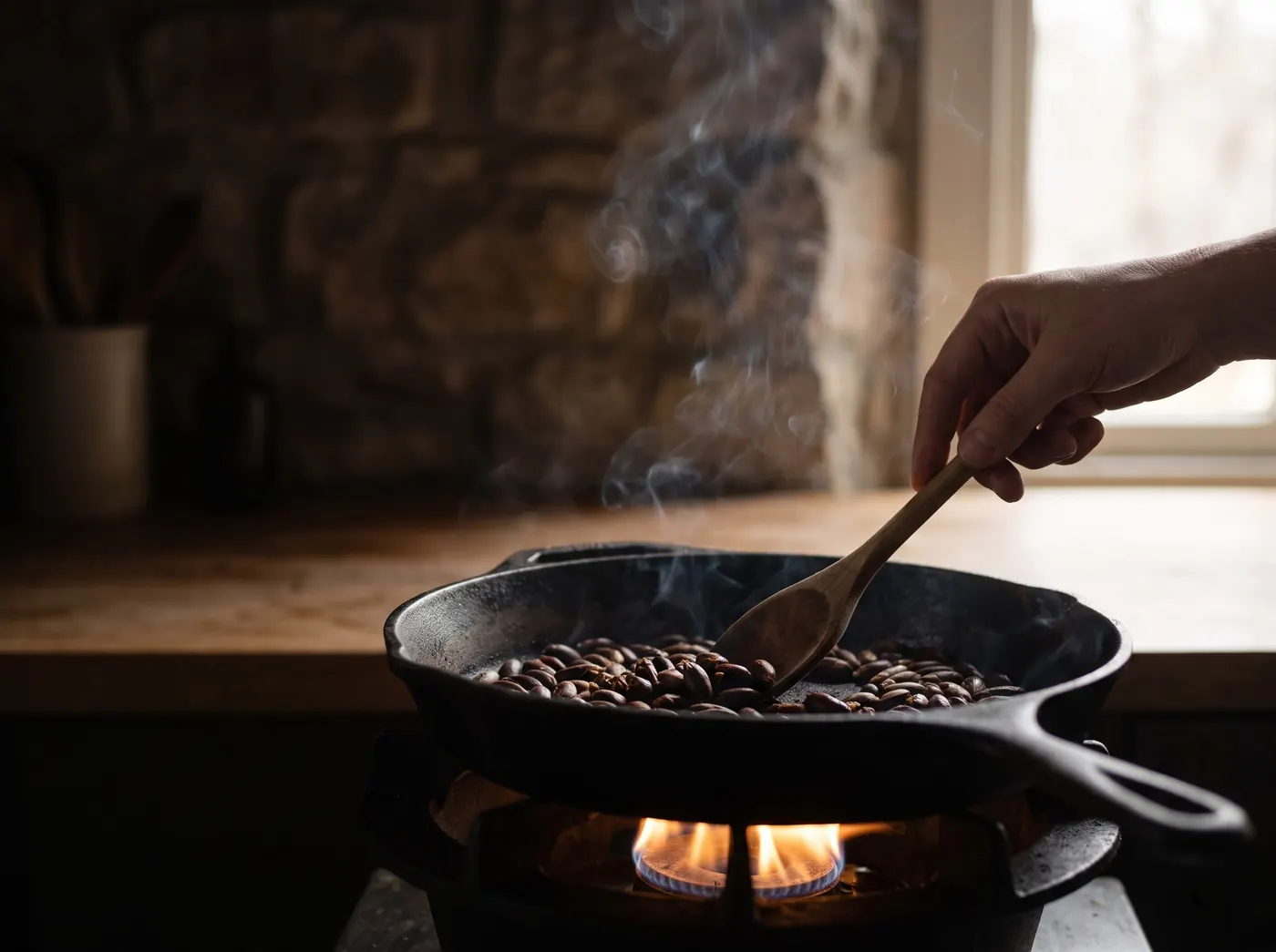
Roasting date stones into a coffee-like drink is a long-standing practice in parts of the Arabian Peninsula and North Africa, often as a way to stretch scarce coffee beans and sometimes simply because families liked it. It never needed a café or a machine. It needed a fire, a pan, a mortar and patience.
A seed most of the world throws away becomes the warmest cup in the house.
The idea behind Azkhaa
What is new is the care. Modern roasting lets you control colour and aroma precisely, and fine milling means the powder brews smooth instead of gritty.
#How does it taste?
If you expect it to taste like coffee, you will be surprised, and probably pleased. Date seed coffee is rounder and gentler. Typical notes include:
- Dark cocoa on the first sip
- Toasted nut, somewhere between hazelnut and roasted almond
- Soft caramel on the finish, from the sugars in the seed
- Earthiness, a pleasant, grounded depth
It is noticeably less acidic and less bitter than a typical brewed coffee, which is why many people find it gentler. It will not give you the sharp lift of espresso, and that is the point. The pleasure is in the aroma, the warmth and the pause.
#Is date seed coffee really caffeine-free?
Yes. Caffeine is found in coffee beans, tea leaves, cacao and a handful of other plants. Date seeds are not one of them. A cup of date seed coffee contains no caffeine unless something has been added to it.
Here is how it compares with a regular cup:
| Regular brewed coffee | Date seed coffee | |
|---|---|---|
| Caffeine per 240 ml cup | roughly 80–100 mg | 0 mg |
| Made from | Coffee beans | Date seeds |
| After-dinner cup | Can keep you awake | Sip freely |
| Ingredients | Varies by brand | Just one (with Azkhaa) |
The figure for regular coffee varies with the bean and the brew, but the difference is real, and it is why date seed coffee has become a favourite for evenings, for people cutting back, and for anyone who simply likes a late cup without the consequences.
#How to enjoy your first cup
Start simple, and let the powder show you what it can do.
- Bring 300 ml of water to a boil in a small pot or dallah.
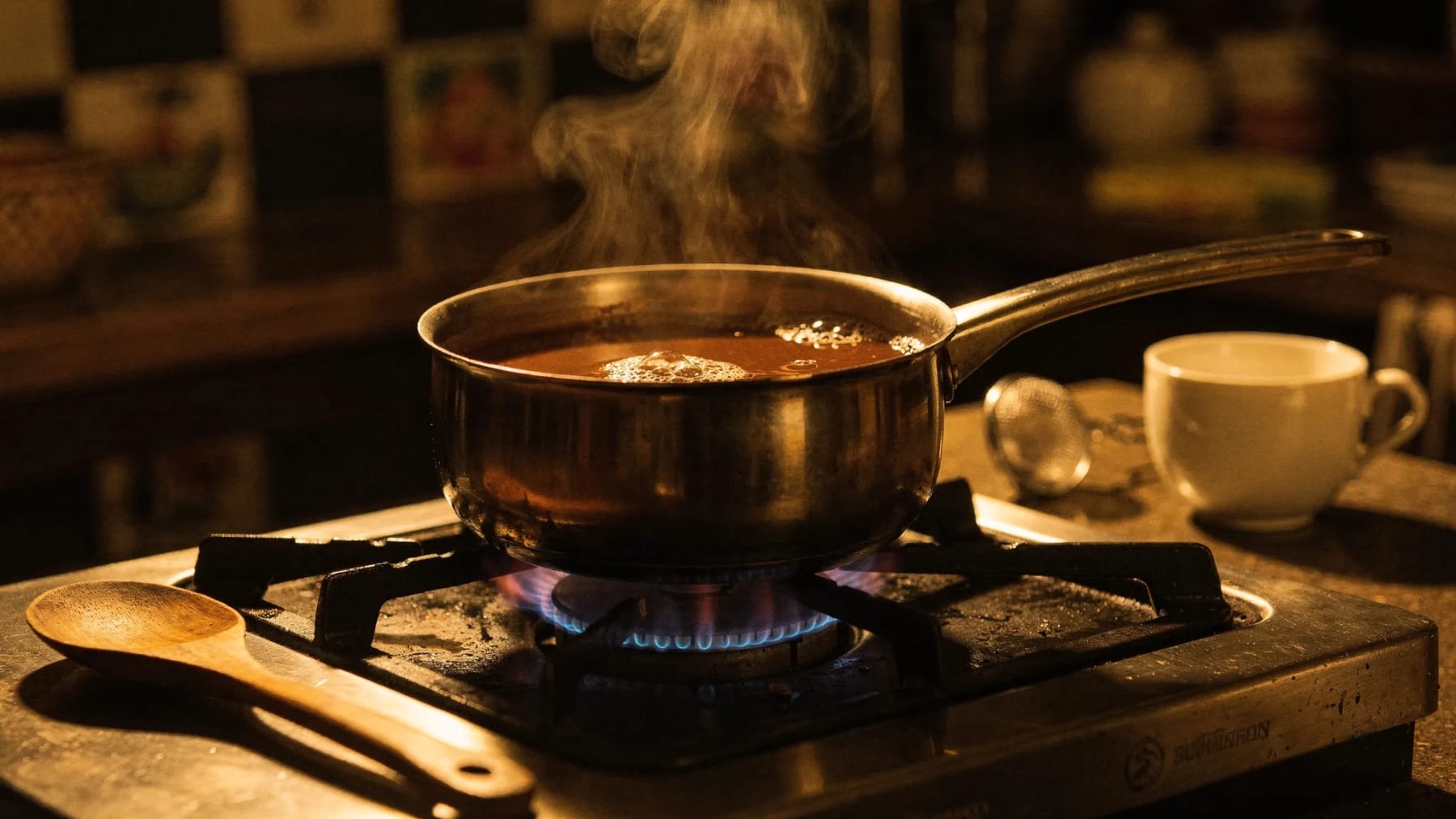
- Stir in 2 level teaspoons (about 10 g) of Azkhaa and lower the heat.
- Simmer gently for 5 minutes, then rest for a minute so the grounds settle.
- Pour slowly into small cups. Serve with a few dates, because the sweetness is made for the bitterness.
Once you know the base cup, try it with a splash of warm milk and a little honey, a pinch of crushed cardamom, or a dusting of cinnamon. For exact ratios and three complete methods, read our full brewing guide.
#What to look for when you buy
Not every pack is equal. A few things separate a good date seed coffee from a disappointing one:
- One ingredient. Roasted date seed, nothing else.
- Fine, even grind. Coarse powder brews gritty and thin.
- A deep, even roast. Pale roasts taste grassy; burnt ones taste bitter. You want chocolate-brown.
- A resealable pouch and a clear best-before date. Aroma fades once opened, so keep it sealed and dry.
- Honest labelling, including a food licence number on the pack.
#Where date seed coffee fits into your day
Think of it as the cup that follows you through the day without keeping score. Morning, when you want a warm start without a spike. Afternoon, alongside something sweet. Evening, when a regular coffee would be a bad idea. Because it is naturally caffeine-free, there is no cut-off hour. If evenings are your main reason for switching, our piece on caffeine-free evening rituals has six ways to make that cup feel special.
#Frequently asked questions
Is date seed coffee the same as coffee?
No. It is made from date seeds and contains no coffee beans. It brews and looks like coffee, which is why it is a popular coffee alternative, but it is a different drink with its own taste.
Does date seed coffee have caffeine?
No. Date seeds do not contain caffeine, so unflavoured, pure date seed coffee is naturally caffeine-free.
What does date seed coffee taste like?
Smooth and earthy, with notes of dark cocoa, toasted nuts and a gentle caramel finish. It is softer and less acidic than regular brewed coffee.
How do I make date seed coffee?
Simmer about 2 teaspoons (10 g) of powder in 300 ml of water for 5 minutes, let the grounds settle and pour. You can also steep it in a French press for 4 to 5 minutes.
Can I add milk or sugar?
Yes. It is delicious black, with dairy or plant milk, or sweetened with honey or date syrup.

Azkhaa roasts and grinds premium date seeds into a naturally caffeine-free coffee, shipped across India. Questions about brewing? Ask us.
Keep reading
More from the journal
Date Seed Coffee vs Regular Coffee: An Honest Comparison
Taste, caffeine, brewing and cost per cup: an honest side-by-side of date seed coffee and regular coffee, and when each one belongs in your day.
Read the story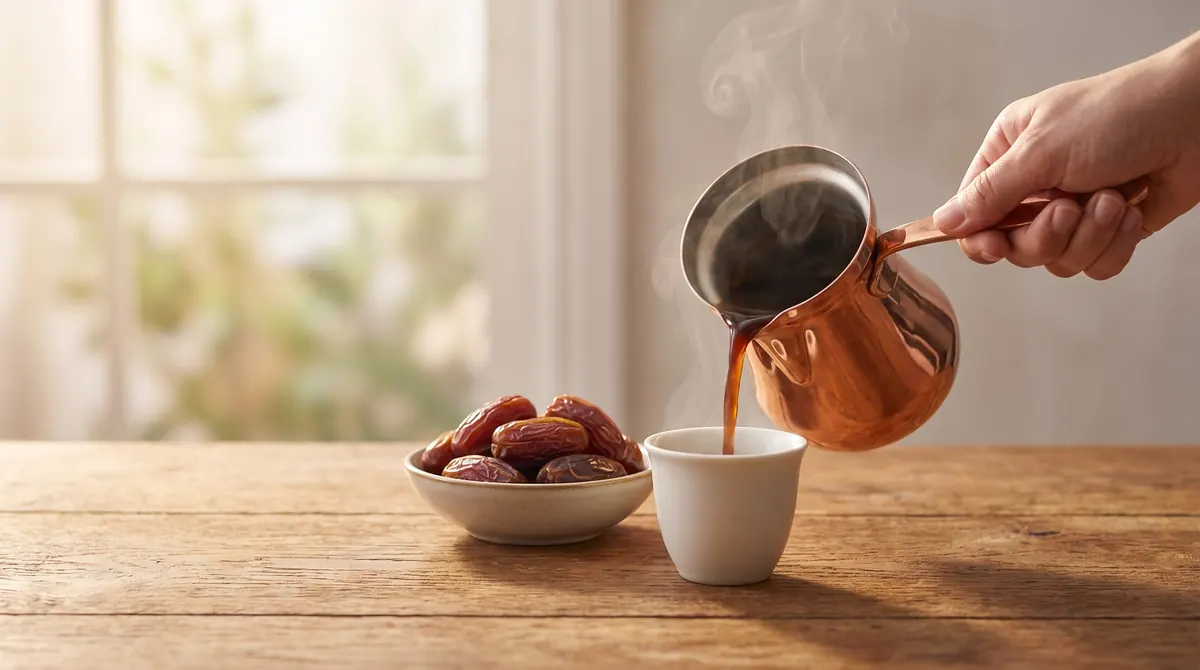
How to Brew Date Seed Coffee: 3 Methods, Perfected
Dallah, French press or café-style latte: exact ratios, timings and small tricks for brewing smooth, aromatic date seed coffee at home, every single time.
Read the story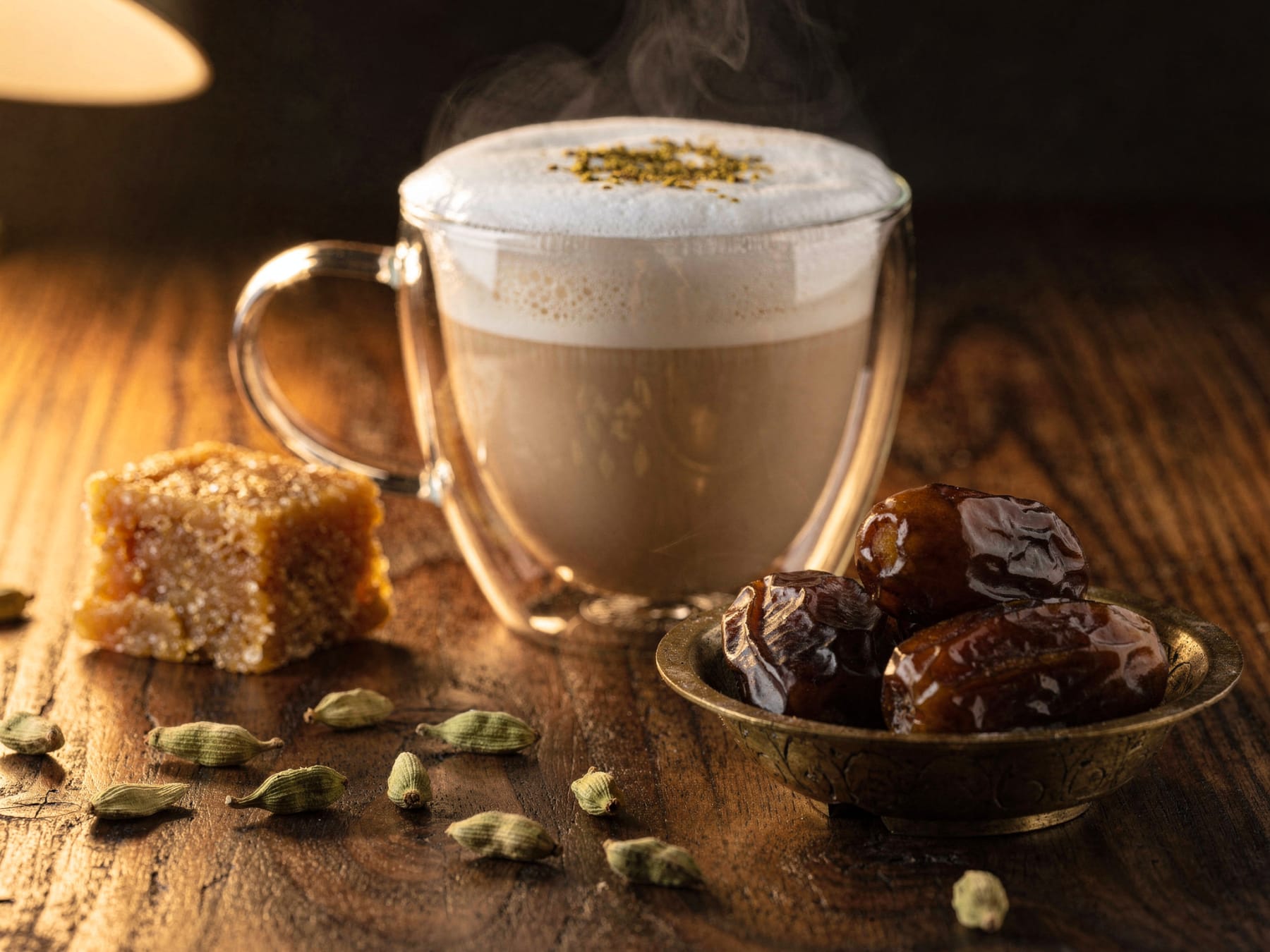
5 Date Seed Coffee Recipes: Lattes, Iced and Spiced Cups
Five easy date seed coffee recipes, from a cardamom jaggery latte to an iced cup and a vanilla affogato. Exact grams, timings and caffeine-free.
Read the story